
Keep the pace moving



Protect players nearby
Golf is a game played in open spaces, but that openness requires strict attention to those around you. Your primary responsibility is to ensure that no one is in danger from your swing or a stray ball. This means staying completely still and silent while another player is addressing the ball and during their stroke.
A single distraction can ruin a good shot or, worse, cause an accident. Treat every swing as if someone is standing right behind the golfer. If you are unsure whether a player is ready, wait until they have clearly finished their stroke before you move or speak.
Never take a practice swing toward another person. Loose debris like rocks, twigs, or grass clippings can fly up and cause injury, and a stray ball is dangerous. Always check your surroundings before swinging.

Before you take a practice swing or step into your stance, look behind you and to the sides. Ensure no one is within range of your club or potential ball flight.
Once another player is addressing the ball, stop all movement. Do not talk, walk, or even shift your weight. Stay completely still until they have finished their stroke.
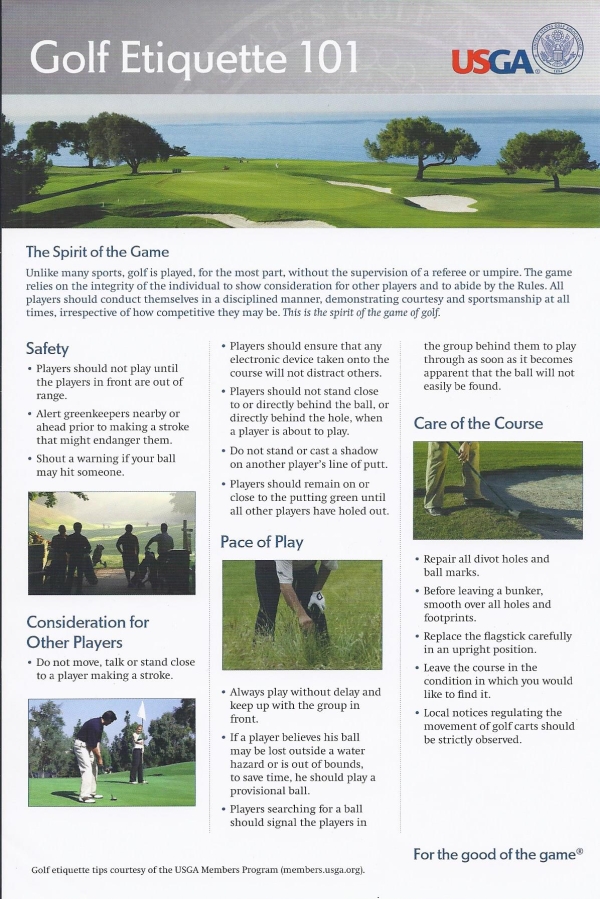
Do not move or speak until the ball has landed or the player has acknowledged the end of their shot. Rushing this process is a common source of distraction and accidents.
Care for the turf and hazards
Playing with respect means leaving the course in better condition than you found it. This is not just about following rules; it is about maintaining the integrity of the game for everyone who plays after you. Proper care of the turf, bunkers, and greens ensures the course remains playable and visually appealing.
Raking bunkers
Bunkers are hazards designed to challenge your shot, but they should not become obstacles for the next player. After hitting out of a bunker, rake the sand thoroughly. Fill in all footprints and divots, then drag the rake lightly across the surface to create a uniform texture. This allows the next golfer to judge the lie accurately and execute their shot without unexpected surprises.
Repairing divots and ball marks
Your ball leaves a mark every time it lands. Repairing divots and ball marks is one of the most visible ways to show respect for the course and your playing partners. For divots, replace the turf if available, or fill the hole with sand from the provided bucket, then tamp it down firmly. For ball marks on the green, use a divot tool to push the grass inward from the edges toward the center. Never pull the mark upward, as this can tear the roots.
General course maintenance
Beyond these specific tasks, always adhere to any local rules regarding rope placement, directional signs, and restricted areas. Courses vary, and these guidelines are in place to protect the turf from excessive wear. By treating the course with care, you contribute to its longevity and quality, ensuring it remains a beautiful place to play for seasons to come.
Handle Equipment and Attire
Golf is as much about presentation as it is about performance. Dress codes have evolved, but the core principle remains: respect the course and your playing partners. Modern golf centers often allow collared shirts in solid colors and dark denim, but private clubs still enforce strict traditional standards. Always check the specific dress code before you tee off. When in doubt, err on the side of formality. A neat appearance signals that you value the game’s traditions.
Proper equipment handling prevents damage to the greens and maintains the flow of play. Keep your clubs in your bag when walking between holes to avoid accidental trips or stray shots. Never drag your bag across the green; lift it to cross or place it on the fringe. When using a cart, stay strictly on the designated paths. Driving off-path compacts soil, damages grass roots, and creates ruts that take weeks to repair.
Small habits matter. Use a ball marker to lift your ball on the green, and repair any pitch marks or divots immediately. A tidy course is a fast course. By keeping your gear organized and your attire appropriate, you reduce friction and show respect for the groundskeepers who maintain the facility.
Common golf etiquette mistakes
Even experienced players slip into bad habits when the round gets competitive or fatigue sets in. These errors often annoy fellow golfers more than they affect the scorecard, yet they can sour the experience for everyone on the course. Fixing them is usually a matter of awareness and a few simple adjustments.
Stepping on putts
This is perhaps the most universally resented breach of etiquette. If your ball is on another player’s line, you must avoid walking across it. Before you putt, check your line of sight and the path your opponent might take. If you must cross the line to retrieve your ball, brush the grass back to its original position with your foot or a coin. It takes seconds and shows respect for your playing partners.
Slow play
Pace of play is the primary enemy of a good round. Being ready to hit when it’s your turn keeps the group moving. If you are unsure of your shot, take your practice swings before you reach the ball. Don’t leave the green searching for lost balls while others wait. If your group falls behind by a hole, let faster groups play through. A quick "play on" gesture clears the way and keeps the course flowing.
Not repairing divots and ball marks
Leaving divots and ball marks on the green damages the course and slows down subsequent putts. Carry a divot repair tool and a rake. After every shot from the tee box, fill in any turf you displaced. On the green, immediately fix ball marks by pushing the grass inward from the edges toward the center, then tap down firmly. A smooth green is a courtesy to the next group.
Distracting others
Focus is fragile. Avoid talking, moving, or shining bright objects near a player who is addressing the ball. Stand still and keep your voice down during their swing. If you are in another group’s sound range, keep conversations quiet. Respecting the concentration of others is a hallmark of graceful play.
Golf etiquette: frequently asked: what to check next
Even experienced players revisit the basics when rules shift or course conditions change. These common questions clarify the nuances that keep the game moving smoothly and respectfully for everyone on the course.
No comments yet. Be the first to share your thoughts!